

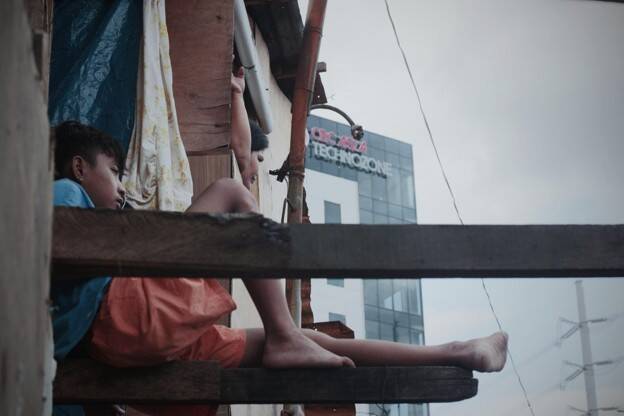
On October 21, 2019 residents in Bacoor, Cavite were forced to leave their homes due to clearing operations. // Copyright / Attribution: Content published by Southern Tagalog Exposure(2019) is used with attribution, and this reference acknowledges the original source.
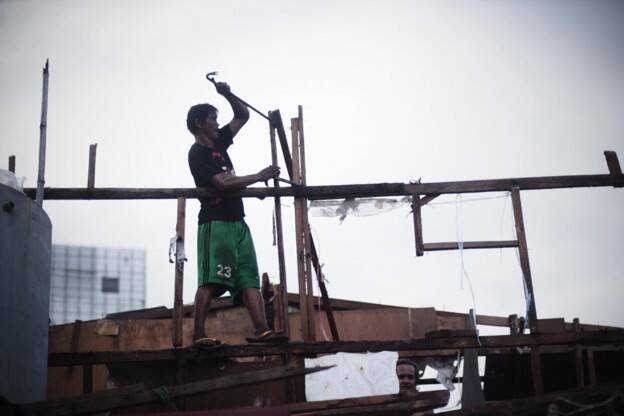
On October 21, 2019 residents in Bacoor, Cavite were forced to leave their homes due to clearing operations. // Copyright / Attribution: Content published by Southern Tagalog Exposure(2019) is used with attribution, and this reference acknowledges the original source.

On October 21, 2019 residents in Bacoor, Cavite were forced to leave their homes due to clearing operations. // Copyright / Attribution: Content published by Southern Tagalog Exposure(2019) is used with attribution, and this reference acknowledges the original source.
Introduction
Everyone has the right to adequate housing—but what would you do if your home were burned down in the middle of the night?
Article 25(1) of the Universal Declaration of Human Rights (UDHR) guarantees that everyone has the right to a standard of living adequate for their health and well-being, including housing, food, and medical care. This means that, in such a situation, everyone—regardless of class, race, or beliefs—should be entitled to emergency shelter, support, and assistance to secure new housing and restore safety and dignity.
Cavite, a rapidly urbanizing province located immediately south of Metro Manila, has become increasingly susceptible to frequent settlement fires. With a population of approximately 4.34 million, the province’s urban expansion—particularly in highly urbanized cities such as Bacoor, Imus, and General Trias—has been accompanied by significant commercial development, drawing both internal migrants and low-income populations in search of employment and affordable housing. This demographic and spatial transformation has, however, contributed to the proliferation of informal settlements in marginal areas, which are often characterized by inadequate housing materials, insufficient access to basic services, and limited emergency infrastructure. Empirical evidence from fact-finding missions conducted by the Karapatan Human Rights Alliance-Cavite indicates a notable increase in the incidence of settlement fires since 2017, prompting the filing of a House resolution for investigation in 20241.
Prevalence of Informal Settlement Fires
These settlement fires form part of a broader historical pattern of displacement that has repeatedly undermined the rights, safety, and dignity of affected communities. In April 2017, a fire in Maliksi 3 left 476 families without homes and with no clear relocation plan, despite the provision of cash assistance (Bulatlat, 2017). The following year saw further destruction, with fires in January 2018 displacing 400 families in Tabing Dagat (Inquirer, 2018), and a subsequent fire in June 2018 rendering 348 families homeless across Maliksi 1, 2, and 32 (Manila Bulletin, 2018). Although local authorities provided immediate aid, long-term solutions remained lacking. Aid agencies, if involved, must collaborate with local government units on comprehensive fire prevention strategies rather than relying solely on immediate handover interventions. In 2019, Niog 1 and Talaba 7 faced threats of demolition and fire, affecting approximately 900 families3, while a July fire displaced 150 families, raising suspicions of arson. The destruction continued in 2020, with a March fire displacing 500 families in Zapote 5, and another in November affecting 400 homes in Alima and Siniguelasan; the impacts of the latter were further exacerbated by Typhoon Rolly.
On the night of November 1, 2020, a fire broke out at approximately 10:00 p.m. in Brgy. Sineguelasan, Bacoor City, Cavite, several hours after most residents had been evacuated as a precaution against anticipated flooding. The fire escalated to a fourth-alarm status before being fully extinguished by firefighting personnel at around 2:00 a.m. Preliminary reports indicate that 398 families, comprising 1,641 individuals, were affected by the incident6. In an April 2021 fire, 500 families were affected in Panapaan. On New Year’s Eve of 2022, 150 families lost their homes in Zapote 5. In December 2023, a fire in Talaba 2 claimed four lives and affected 80 families. In 2024, a February fire in Niog 10 destroyed 30 homes, while fires in August and September in Zapote 3 devastated 585 families and 4,195 people, respectively, resulting in three deaths. Although 8,636 individuals represents just 0.20% of the city's population, this figure should not be dismissed as insignificant, as even a small percentage can reflect a substantial human impact warranting serious attention. While investigations are still ongoing, some residents have raised suspicions of deliberate arson, with eyewitness accounts reportedly identifying 'at least three men holding torches' in the vicinity at the time the fire began (Community resident, personal communication, August 2024). These fires have displaced thousands of families, underscoring severe social and economic vulnerabilities and raising human rights concerns related to adequate housing, protection from arbitrary displacement, and access to emergency assistance. Impacts are compounded by chronic poverty and limited employment opportunities, particularly among migrant and low-income populations, leaving already vulnerable communities exposed to sudden and devastating loss.
Displacement and Development Projects
These incidents raise a critical question: do they reflect the vulnerability of communities living in urban poverty, or are they deliberate attempts to clear land for redevelopment? Evidence from urban and peri-urban areas indicates that such fires disproportionately affect marginalised populations and often occur in locations targeted for commercial development or major infrastructure projects, highlighting structural links between urban planning, investment priorities, and governance failures. In Metro Manila, informal settlers are 2.37 times more likely to experience a fire compared to formal city dwellers, with informal settlements accounting for 23% of all recorded fires.
In Bacoor, the locations of these fires correspond with planned projects such as the Bacoor Diversion Road, the Bacoor Reclamation and Development Project, and the LRT-1 Cavite Extension. During the Duterte administration, increased Chinese investment—particularly through Philippine Offshore Gaming Operators (POGOs)—fuelled local speculation that Niog 10 was being considered for redevelopment — almost as a Little Hong Kong — to house POGO workers, a narrative observed by the author during a community visit in 2019.
The Asian Legal Resource Center (2014) notes that forced evictions have long been a recurring issue in the Philippines, reflecting tensions between urban development and the housing rights of marginalized communities. This is further illustrated by Flora P. Holasca vs. Anselmo P. Pagunsan, Jr. (A.M. No. P-14-3198, Supreme Court, July 23, 2014), in which Sheriff Pagunsan of the Regional Trial Court, Branch 20, Imus, Cavite, was found guilty of gross inefficiency for failing to properly implement a writ of execution involving the recovery of real property. The Court emphasized that sheriffs must ensure occupants vacate premises within the prescribed period in a lawful and orderly manner, enlisting law enforcement if necessary. While the case centers on administrative accountability, it highlights the obligations of state actors in eviction proceedings — obligations that remain critically relevant in the context of development-driven displacement of marginalized communities.
Nearly a decade later, residents of Zapote 3 continue to face displacement pressures amid large-scale development projects such as the LRT-1 Cavite Extension — an 11.7-kilometre elevated light rail project extending Metro Manila's LRT Line 1 southward to Bacoor, Cavite, funded through a hybrid model combining Japanese Official Development Assistance via JICA, private investment from the Light Rail Manila Corporation (LRMC), and Philippine government financing. On November 15, 2024, a demolition team forcibly evicted five households, reportedly without proper legal documentation, including a Court Order or formal Demolition Notice (Community resident, personal communication, August 2024). Personnel from the local government unit and private security contractors were present, but the legitimacy of the operation was not formally justified. As such, private-public infrastructure and reclamation projects, often driven by commercial priorities, can place marginalized communities at heightened risk of displacement, inadequate housing, and exposure to hazards, and forms of violence such as but not limited to harassment, and intimidation.
Business, Human Rights and Governance
Chinese-linked investments in the Philippines, particularly following the 2019 Joint Exploration Agreement, highlight the complex intersection of business, governance, and human rights. While framed as drivers of economic growth and infrastructure development, such investments—including POGOs—have raised concerns about their social and environmental impacts. At their peak, it has reshaped local labor markets and urban space, especially in Cavite, concentrating investment and workers in large facilities. Although regulatory changes have reduced the sector, the earlier expansion illustrates how foreign investment can intensify pressures on land, housing, and local communities, with implications for displacement and human rights.
Local civil society groups have increasingly questioned the framing of informal settlement fires as accidental, suggesting that deliberate arson may be used to clear land for large-scale development projects. While infrastructure projects like the railway extension promise mobility and economic benefits, these gains should not come at the expense of human dignity.
In contrast, the Right to Development (RTD), as a collective right articulated in the UN Declaration on the Right to Development (1986), was introduced to address the structural inequalities that frameworks such as the ICESCR alone cannot resolve. While the ICESCR guarantees economic, social, and cultural rights, its framework relies on progressive realisation, giving states wide discretion and limited accountability, which often leaves marginalised populations unprotected. The RTD seeks to bridge this gap by reframing development itself as a human right requiring equitable international cooperation, rather than leaving it to the discretion of individual states. However, the RTD remains largely aspirational and non-justiciable, and has been criticised for allowing wealthier states and international actors to shape development agendas in ways that reflect their own economic and political interests rather than the needs of vulnerable communities (United Nations, 1986). In this sense, the RTD exposes the limitations of the ICESCR: without binding enforcement mechanisms or equitable global governance, both rights risk remaining symbolic rather than transformative. International development initiatives can therefore inadvertently perpetuate dependency or interventionism rather than empower economically weaker states and communities. This dynamic is clearly reflected in the case of Cavite, where the convergence of foreign investment, large-scale infrastructure development, and weak governance frameworks has disproportionately displaced already marginalized residents, exposing the gap between development rhetoric and human rights reality.
Implications and Recommendations
In Cavite and other coastal areas, fisherfolk and urban poor are frequently displaced to marginal lands that are highly vulnerable to fire hazards, highlighting the broader social and spatial consequences of development-driven investments. Housing is not merely shelter; it represents security, dignity, and the right to live free from harm. The forced eviction or displacement of Bacoor’s urban poor—often labeled “professional illegal settlers”—raises serious concerns under international law, including the right to adequate housing as guaranteed by Article 25(1) of the UDHR and Article 11(1) of the ICESCR, and the right to life and security of person under Articles 6(1) and 9(1) of the ICCPR. Fires in these communities may function as de facto eviction tactics, exposing residents to hazards and undermining their fundamental rights.
The Philippine government bears a legal obligation to take deliberate and concrete measures to uphold housing rights, including ensuring safe relocation, adequate shelter, and access to basic services. Under Section 29 of the Urban Development and Housing Act (Republic Act No. 7279, 1992), local government units, in coordination with the National Housing Authority, are required to provide relocation or resettlement sites with basic services and facilities, as well as access to employment and livelihood opportunities sufficient to meet the basic needs of affected families. Under the Marcos administration, this obligation has been reiterated through Executive Order No. 34 and the flagship Pambansang Pabahay Para sa Pilipino (4PH) Housing Programme, launched in September 2022 to address a housing backlog of 6.5 million units, with several housing projects constructed for informal settlers in Bacoor since 2023. However, critics have argued that these commitments remain insufficient in protecting communities facing displacement as a result of large-scale development and infrastructure projects, and it remains to be assessed whether existing initiatives adequately meet basic needs, comply with housing standards, or provide meaningful economic opportunities for affected residents.
Urban development must therefore adopt a human rights-based approach, ensuring that projects involve meaningful public consultation and provide legal remedies for displaced populations. In this regard, authorities should direct the local fire bureau to conduct impartial investigations into the causes of these fires and ensure appropriate redress for affected communities, as the failure to do so constitutes a violation by omission and raises concerns about potential state complicity.
The progressive realization of rights under the ICESCR does not permit regressive actions, and development projects must not actively prevent or reverse the fulfillment of these rights. To address potential violations, the government must prioritize meaningful community engagement, provide adequate housing and relocation options that meet basic standards, and ensure livelihood opportunities for displaced populations. Domestic remedies should be strengthened, and when ineffective, communities should be supported in accessing international mechanisms, including the UN Human Rights Council, the CESCR, and the UN Special Rapporteur on Adequate Housing. Moreover, advocacy, documentation, and legal redress are critical for holding authorities accountable and ensuring that infrastructure and investment projects advance development without undermining human dignity or exacerbating social vulnerability.
In a city marred by POGOs, railway projects, and the persistent threat of fires, contrary to the government's efforts to reclaim land, the urban poor communities are struggling to reclaim their rights—and perhaps a peaceful sleep at night, free from fright.
REFERENCES:
Aguilar, K. (2024) 'House probe sought into 8 fire incidents in areas set for reclamation', Philstar.com, 18 March. Available at: https://www.philstar.com/headlines/2024/03/18/2341484/house-probe-sought-8-fire-incidents-areas-set-reclamation (Accessed: 29 April 2026).
Asian Legal Resource Centre (2014) 'Philippines: Forced evictions push victims to hunger, inhuman living conditions', Written submission to the United Nations Human Rights Council, 25th Session, Agenda Item 3, 28 February. Available at: https://alrc.asia/philippines-forced-evictions-push-victims-to-hunger-inhuman-living-condition/ (Accessed: 7 January 2026).
Cinco, M. (2018) '400 families in Cavite lose homes to fire', Inquirer Southern Luzon, 24 January. Available at: https://newsinfo.inquirer.net/957194/400-families-in-cavite-lose-homes-to-fire (Accessed: 3 January 2026).
Deiparine, C. (2020) 'Fishers' group doubts fire in Bacoor coastal communities was mere accident', Philstar.com, 2 November. Available at: https://www.philstar.com/nation/2020/11/02/2054196/fishers-group-doubts-fire-bacoor-coastal-communities-was-mere-accident (Accessed: 5 January 2026).
Deña, C.B. (2021) '3 hurt, 500 families displaced by Bacoor fire', Manila Bulletin, 14 April. Available at: https://mb.com.ph/2021/04/14/3-hurt-500-families-displaced-by-bacoor-fire/ (Accessed: 14 December 2025).
Dimsum Daily Newsroom (2023) 'Tragic blaze claims four lives in Bacoor, Cavite residential area in the Philippines', Dimsum Daily, 15 December. Available at: https://www.dimsumdaily.hk/tragic-blaze-claims-four-lives-in-bacoor-cavite-residential-area-in-the-philippines/ (Accessed: 5 January 2026).
Fujino, A. (2004) Metro Manila LRT Line 1 Capacity Expansion Project [External evaluation report]. KRI International Corp. and Japan International Cooperation Agency (JICA). Available at: https://www.jica.go.jp/english/activities/evaluation/oda_loan/post/n_files/1565399_2-16_full.pdf (Accessed: 29 April 2026).
Lund University Student Papers (n.d.) Fire risk and vulnerability in urban informal settlements in Metro Manila [Student thesis]. Available at: https://lup.lub.lu.se/student-papers/search/publication/8962068 (Accessed: 29 April 2026).
Mallari, D.T. Jr. (2024a) '30 houses razed in Bacoor City fire', Inquirer Southern Luzon, 11 February. Available at: https://newsinfo.inquirer.net/1902509/30-houses-razed-in-bacoor-city-fire (Accessed: 16 December 2025).
Mallari, D.T. Jr. (2024b) '600 families displaced in Bacoor City fire', Inquirer Southern Luzon, 7 August. Available at: https://newsinfo.inquirer.net/1970352/600-families-displaced-in-bacoor-city-fire (Accessed: 16 December 2025).
Manila Bulletin (2020) 'After "Rolly," Bacoor evacuation centers remain occupied by 398 families affected by fire', Manila Bulletin, 2 November. Available at: https://mb.com.ph/2020/11/02/after-rolly-bacoor-evacuation-centers-remain-occupied-by-398-families-affected-by-fire/ (Accessed: 5 January 2026).
Moral, M.A. (2024) '4PH program: Government's tool in addressing the housing crisis', BusinessWorld Online, 14 February. Available at: https://www.bworldonline.com/special-features/2024/02/14/575609/4ph-program-governments-tool-in-addressing-the-housing-crisis/ (Accessed: 29 April 2026).
Philippine Daily Inquirer (2024) 'Cavite groups back House reso on probe into series of fires', Inquirer.net, 18 March. Available at: https://newsinfo.inquirer.net/1920030/fwd-groups-on-filing-house-reso-re-successive-fires-cavite (Accessed: 29 April 2026).
Republic of the Philippines (1992) Republic Act No. 7279: Urban Development and Housing Act of 1992. Official Gazette of the Republic of the Philippines. Available at: https://www.officialgazette.gov.ph/1992/03/24/republic-act-no-7279/ (Accessed: 29 April 2026).
Salamat, M. (2017) 'Fisherfolk, urban poor suspect deliberate burning down of their community', Bulatlat, 8 April. Available at: https://www.bulatlat.com/2017/04/08/fisherfolk-urban-poor-suspect-deliberate-burning-community/ (Accessed: 15 December 2025).
Siytangco, A.J. (2018) '348 families rendered homeless in Bacoor fire', Manila Bulletin, 21 June. Available at: https://mb.com.ph/2018/06/21/348-families-rendered-homeless-in-bacoor-fire/ (Accessed: 15 December 2025).
Soledad, A. (2024) Interview with Karapatan Human Rights Alliance–Cavite representative, October 2024. [Personal communication].
ST eXposure (2019) 'Sitio Niog I and Talaba VII demolition set to displace 900 families', ST eXposure, 22 October. Available at: https://stexposure.wordpress.com/2019/10/22/sitio-niog-i-and-talaba-vii-demolition-set-to-displace-900-families/ (Accessed: 6 January 2026).
Tupas, E. (2022) '150 families homeless in fire in Bacoor, Cavite', Philippine Star, 2 January. Available at: https://www.philstar.com/nation/2022/01/02/2151328/150-families-homeless-fire-bacoor-cavite (Accessed: 4 January 2026).
Ulibas, P.R. (2024) 'LRT-1 Cavite Extension Phase 2 derails Zapote 3 residents', Philippine Collegian, 5 December. Available at: https://phkule.org/article/1358/lrt-1-cavite-extension-phase-2-derails-zapote-3-residents (Accessed: 7 January 2026).
Umali, J. (2019) 'Hundreds left homeless in Cavite demolition', Bulatlat, 23 October. Available at: https://www.bulatlat.com/2019/10/23/hundreds-left-homeless-in-cavite-clearing-operations/ (Accessed: 18 December 2025).
Umali, J. (2020a) '500 families left homeless in aftermath of Cavite blaze', Bulatlat, 24 March. Available at: https://www.bulatlat.com/2020/03/24/500-families-left-homeless-in-aftermath-of-cavite-blaze/ (Accessed: 5 January 2026).
Umali, J. (2020b) 'Fire destroys 400 homes in Cavite reclamation zone during super typhoon', Bulatlat, 2 November. Available at: https://www.bulatlat.com/2020/11/02/fire-destroys-400-homes-in-cavite-reclamation-zone-during-super-typhoon/ (Accessed: 4 January 2026).
United Nations (1948) Universal Declaration of Human Rights. Paris: United Nations. Available at: https://www.un.org/en/about-us/universal-declaration-of-human-rights (Accessed: 6 January 2026).
United Nations (1966) International Covenant on Civil and Political Rights. New York: United Nations. Available at: https://www.ohchr.org/en/instruments-mechanisms/instruments/international-covenant-civil-and-political-rights (Accessed: 29 April 2026).
United Nations (1966) International Covenant on Economic, Social and Cultural Rights. New York: United Nations. Available at: https://www.ohchr.org/en/instruments-mechanisms/instruments/international-covenant-economic-social-and-cultural-rights (Accessed: 29 April 2026).
United Nations (1986) Declaration on the Right to Development, General Assembly Resolution 41/128, 4 December. Available at: https://www.ohchr.org/en/instruments-mechanisms/instruments/declaration-right-development (Accessed: 5 January 2026).
UPLB Perspective (2020) 'Cavite groups protest development aggression, Bacoor LGU no show in dialogue', UPLB Perspective, 29 November. Available at: https://uplbperspective.wordpress.com/2020/11/29/cavite-groups-protest-development-aggression-bacoor-lgu-no-show-in-dialogue/ (Accessed: 29 April 2026).
Xinhua News Agency (2024) 'Aftermath of slum area fire in Cavite, Philippines', Xinhua News Agency, 11 September. Available at: https://english.news.cn/20240911/10f1adaa43dd4fb0864f2c3a86a4eb68/c.html (Accessed: 3 January 2026).
*Born and raised in Rizal, Philippines, Casey has long been passionate about studies at the nexus of human rights, conflict, peace, and social justice. She is currently pursuing her MA in Human Rights from Mahidol University, Thailand, and works as a contributing researcher for the Asia Pacific Migrants Mission. She also serves as Communications Manager for two regional programs, Strengthening Human Rights and Peace Research and Education in ASEAN/Southeast Asia (SHAPE-SEA) and the SEA Coalition for Academic Freedom (SEACAF). Through her research and advocacy, Casey aims to promote a human rights-based approach in civil society and development work, striving for a dignified, more just and equitable society.
Add comment
Comments